

Re:form: Support and guidance sessions
We need spaces of support. Spaces where we can see our reality from a different perspective. Spaces where we can find resources, where we can question without the pressure of coming up with a concrete, coagulated answer, where we can experiment without the need to succeed.
Through Reform, we organize a series of individual support sessions dedicated to artists, cultural operators and cultural managers who are currently going – or who feel the need to go – through a process of active self-reflection. We focus on the relationship with cultural activity and, more broadly, the cultural sector, addressing the systemic challenges that often become overwhelming and the way they impact the life, the emotional and mental health of cultural workers.
The session will run from February to June 2025. The scheduling of the sessions will be agreed upon by each participant and mentor.
Meet the mentors

Milica Ilic
Milica Ilic is a cultural expert with over 20 years of experience in transnational collaboration. Her professional interests include intercultural collaboration, institutional transformation and social change through arts and culture.
As a creative consultant, Milica participates in the design, implementation, management and evaluation of transnational projects, programmes and initiatives. She provides management, policy and curatorial advice to cultural organizations, creative agencies, higher education institutions and artists. Through her experience in the cultural sector in different formats and frameworks she has gained an in-depth knowledge of the challenges of today’s society and the vulnerabilities to which artists and cultural operators are exposed, which is why she advocates for a stronger and fairer arts and culture sector.
Explored topics
Alternative working models
- Aim: Identifying actions and micro-actions that can generate changes in the current way of working; supporting artists and cultural operators in finding new ways of working, adapted to their needs and values.
- Topics: (re)sources of inspiration, alternative practices
Connecting with your own values within a system
- Aim: Awareness of the particularities of the system/institution/organization of reference, of existing challenges, opportunities and divergences in relation to personal values; to explore personal values and the possibility to cultivate them within the system/institution of reference.
- Questions: How can you live more attuned to your values within a system or institution? Can organizations be effective in creating spaces of freedom?
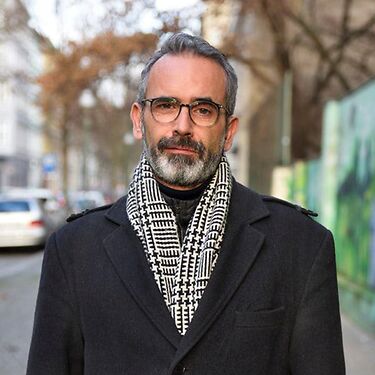
Mahir Namur
Mahir Namur is a former engineer, now a cultural manager, psychological counselor and university lecturer. After working in the construction sector for several years, he established and managed an event management company and an NGO for 25 years focusing on the fields of cultural communication, cooperation and cultural development. For the past 14 years he has worked as a psychological counselor for individuals and organizations. He completed an NLP course and obtained a coaching certificate in Istanbul, a course on elementary existential analysis at the Existential Academy Istanbul, a course in Logo – Pedagogy (based on logotherapy and existential analysis) at the Viktor Frankl Institute in Vienna, advanced existential coaching at the Existential Academy in London and a course in psychological counseling at the European Institute of Logotherapy and Psychology in Linz. He is a certified psychological counselor and coach registered at the Chamber of Commerce in Vienna.
He has developed two training programs: ‘Relationship Management’ and ‘Meaning-Driven Strategic Planning’, combining his experiences in strategic planning, management and coaching, and has given training courses in universities and NGOs in Europe (University of the Arts London, BBK Berlin, The Paintbrush Factory Cluj, Academy of Arts Halle, Academy of Arts Vienna, Yeditepe University Istanbul or Mimar Sinan University) in English, Turkish and German during his career.
Topics explored within the Reform counseling sessions:
Navigating work-life balance
- Aim: Addressing individual needs in the context of one’s private and professional life. Understanding the two sides as a whole and finding solutions to harmonize conflicts.
- Topics: recognizing values and needs, addressing and managing boundaries, the need for personal time and space, overlaps and disagreements between work and private life
Relational Ecosystems
- Aim: Understanding relational dynamics and how they influence us both personally and professionally. Reframing relationships in our lives as a complex and permeable system.
- Topics: personal relationships, professional relationships, addressing existing relational conflicts
Existential Issues
- Aim: Reflecting on core values and beliefs that influence our daily decisions, addressing deeper questions of purpose, meaning, and authenticity in life. Exploring how existential concerns shape our identity, relationships, and professional endeavors.
- Topics: Identifying and prioritizing core values and beliefs, Coping with uncertainty and ambiguity in life, Addressing existential anxiety and fear of failure, Exploring life purpose and individual authenticity, Balancing personal freedom with responsibility, Reflecting on identity and life transitions, Understanding the role of meaning in personal and professional choices

Angelica Postu
Angelica Postu works as a music therapist at the Charité University Hospital for Psychiatry in Berlin and is a doctoral student at the University of the Arts in Berlin in the department of music therapy. As a university lecturer, Angelica Postu teaches Introduction to Music Therapy seminars at the National University of Music in Bucharest. In 2017 Angelica Postu founded the Romanian Music Therapy Association, the only one in the country, which represents and promotes music therapy and its practitioners in Romania.
After obtaining master’s degrees in piano performance, psychology and music therapy in Bucharest, Berlin and Brussels, Angelica Postu has developed in recent years a unique counseling and mentoring approach in working with professional classical musicians, as well as visual and visual artists, in understanding and developing their emotional development and in dealing with stress and anxiety.
Explored topics
Emotional communication and resilience
- Approach: Develop emotional strength to manage challenges in creative fields, cope with rejection and overcome burnout.
- Topics: mindfulness, stress management, work-life balance, dealing with criticism.
Cultivating creative confidence
- Approach: Empowering cultural workers to trust their creative instincts, to reflect and free themselves from self-doubt.
- Topics: positive self-talk, overcoming impostor syndrome, exploring self-honesty.
Self-reflection and personal development
- Approach: Using reflective practices to enhance self-awareness and personal growth.
- Topics: journaling, introspection, lifelong learning, setting growth-oriented goals.
Creating boundaries for mental health and creativity
- Approach: Helping cultural workers set boundaries to protect their mental well-being.
- Topics: preventing burnout, setting healthy boundaries, balancing personal and professional life.
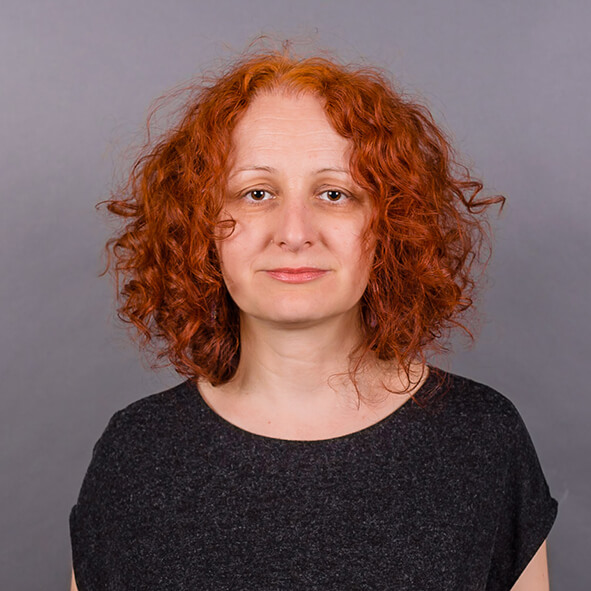
Rarița Zbranca
Rarița has 20 years of experience in cultural management, programming, research and policy. She is involved in cultural policy development in Cluj-Napoca (where she coordinated the elaboration of the Cultural Strategy), but also at national level through her work in the Coalition for the Independent Cultural Sector and at European level. She is a member of the strategic group A Soul for Europe and member of the board of directors of the European House for Culture and the Balkan Express network. She has contributed as a speaker and trainer to numerous professional forums, including major conferences such as A Soul for Europe Berlin, the European Cultural Forum, IETM Plenary Meetings and the Wroclaw Cultural Congress.
She has also worked professionally in the fields of media and democracy in different organizations such as the Ethnocultural Diversity Resource Centre and the Soros Foundation for an Open Society. In 2024 she obtained her PhD at the Faculty of Political, Administrative and Communication Sciences of the Babeș-Bolyai University, researching the relationship between culture and emotional and mental well-being in cities.
Explored topics
Alternative Work Models
- Scop: Identificarea acțiunilor și micro-acțiunilor care pot genera schimbări în modul actual de lucru; sprijinirea artiștilor și operatorilor culturali în a găsi noi formate de lucru, adaptate nevoilor și valorilor lor
- Subiecte: (re)surse de inspirație, practici alternative de lucru
Connecting with Personal Values within a System
- Approach: Raising awareness of the specific characteristics of the system/institution/organization in question, the challenges and opportunities present, and the divergences from personal values; exploring personal values and the possibility of nurturing them within the system or institution.
Adjusting Work Processes to Personal and Organizational Capacity
- Approach: Becoming aware of the capacity limits of any living organism or system and recognizing the extractive and unsustainable nature of efforts to do “more” and “faster”; identifying mechanisms of self-exploitation and exploring directions for adjustment.
- Topics: Connecting with personal resources and limits, transitioning toward a work style aligned with one’s capacity.
My Place in the Cultural Ecosystem
- Approach: Understanding one’s professional trajectory and current position in relation to personal aspirations; clarifying one’s role in complex professional situations to make informed decisions about the future.
Good to know:
- The sessions are free of charge and will be held online, by reservation after registration.
- Depending on the chosen mentor, sessions will be held in Romanian or English.
- You can choose one support partner, depending on the topics they propose and your needs.
- You will benefit from 4 hours of counseling, as follows: the getting to know you session will last 2 hours, and the other 2 hours will be distributed as you decide with your mentor.
- The topics discussed, as they relate to your professional and personal life, are confidential.
Things we value in the process:
Responsibility
If you have already signed up but can no longer attend, please let us know in advance so we can offer your spot to someone else.
The same principle applies once the support sessions begin. If you have scheduled a session but are unable to attend, we kindly ask you to communicate with your mentor ahead of time to reschedule.
Trust
At this stage, we can offer you access to guidance sessions with a single mentor. We will review your application form and the needs that drive your involvement in this program, and based on that, we will connect you with the mentor whose topics and areas of expertise align with your needs. The individuals selected as support partners are equipped with the ability and openness to deeply explore the questions troubling you, and your willingness to engage in this process is, for us, a valuable sign of trust that we deeply appreciate.
Dialogue
Each experience will be personal and confidential. However, at the end of the sessions, participants will receive a feedback form to help us better understand the usefulness of these sessions and identify ways to improve them. Therefore, if you have insights to share at the end—or even during the sessions, when necessary—we are here to receive your thoughts and respond to them with transparency and care.
Additionally, if during this process, circumstances arise that prevent you from attending all the sessions offered and/or lead you to withdraw, it would be helpful if you could communicate your decision to us.

