

Studiotopia is a European initiative, in which we are partners, that explores the ecological implications of the *Symbiocene through a transdisciplinary approach. The program began five years ago, during which time artists and scientists have successfully experimented with questions related to science through the lenses of art, science, nature, and technology. The residency program aims to encourage scientists to exchange ideas, knowledge, and methodologies with visual artists from around the world while visiting their studios.
The results, concepts, research, or artworks generated during the Studiotopia residencies will be exhibited in partner spaces across Europe. The program aims to better understand how artists and scientists can work together and how these interactions can contribute to achieving the United Nations’ sustainable development goals.
*The Symbiocene = that period in Earth’s history where humans symbiotically reintegrate themselves, emotionally, psychologically and technologically, into nature and natural systems.
Studiotopia: Enter the Symbiocene with Arts and Science is the theme of the latest edition of Studiotopia. It aims to offer new perspectives on exploring the challenges of the 21st century (climate change, the conflict in Ukraine, digital transformation, etc.) from the viewpoint of artists and scientists. We strive to create an interdisciplinary process around the themes of nature, humanity, and technology through a cross-sectional approach to ethical and philosophical questions. The project’s goals are innovation, sustainability, and public engagement..


Studiotopia aims to:
– Increase collaboration between artists and scientists.
– Provide opportunities for young people in the fields of art and science.
– Highlight key European political initiatives, such as the European Green Deal.
– Understand the potential of interactions between art and science.
– Enhance the abilities of selected artists and scientists to understand and address contemporary sustainability challenges through innovative transdisciplinary interactions.
– Improve the educational capacities of selected artists and scientists to work with young people.
– Engage the creativity of young people in solving contemporary challenges.
– Raise public awareness about the existence of interactions between art and science.
– Foster systematic collaboration between art and science, with philosophers and other humanities scholars becoming more involved in working with artists, and vice versa.
– Encourage policymakers to adopt public policies that support interactions between art and science within future environmental, sustainable, and developmental policies.
What we do, briefly
- We have selected a Local Challenge Committee (LCC), composed of 3 members, tasked with overseeing the collaboration between scientists and artists.

Ciprian Mihali

Mihaela Ghiță

Alexandru N. Stermin
- We have chosen a scientist who will propose local and global challenges and collaborate with the resident artist. The scientist will actively participate in the artist selection process, ensuring that the selected artist’s application aligns with the residency theme derived from the identified challenges.
Tibor Hartel, Established Scientist
Tibor Hartel is an Associate Professor at Babes-Bolyai University, Faculty of Environmental Science and Engineering. His background is population, community, landscape ecology and conservation biology. In the past decade he increasingly broadened his areas of interest towards the human dimensions of large carnivore conservation, urban green systems and ancient land use systems (wood-pastures). He feels he can contribute to areas where knowledge types (traditional, modern) about nature and its management (land use) matters, where potential conflicts should be navigated or even solutioned, where mismatches exist between knowledge and aspirations related to land use (see The Traditional Ecological Knowledge conundrum) and where it is about (re)diversifying human-nature connections for protecting nature in production systems.

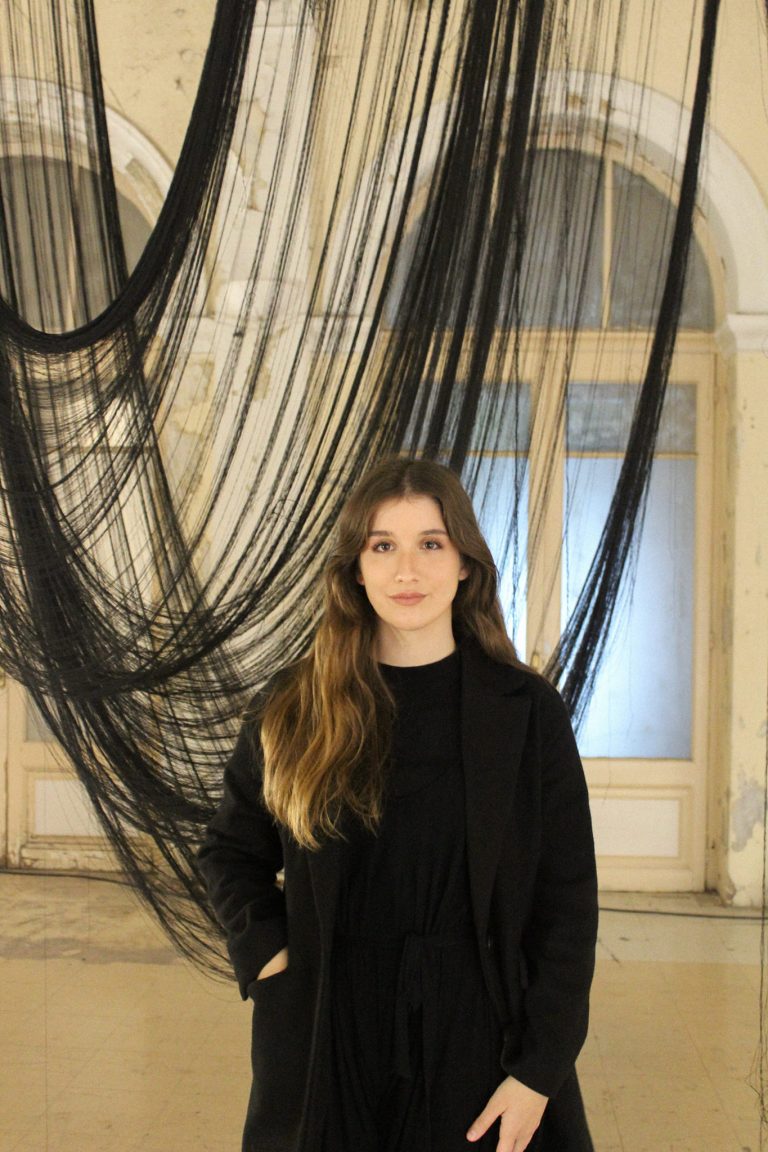
- The artist selected to participate in the collaborative residency is Ânia Pais – a Portuguese artist interested in the role of green spaces in urban environments.
Ânia Pais, artist
Ânia Pais, a Portuguese visual artist, lives and works between the village of Atalaia, in Covilhã, and Lisbon. She holds a bachelor’s and master’s degree in Painting from FBAUL. Her work focuses primarily on installation, with a diverse and experimental field of research, through the use of textiles, ceramics, photography, and performance.
“I consider my work a response or a testimony of a conversation with the land, with the space and time that welcome me. I am interested in space as the main influence, allowing the landscape to guide my exploration. I am intrigued by how space generates motivation and necessity in the body and spirit, and this sensitivity to the landscape plays a crucial role in my creative process.”
Identified challenges
Global context
The landscape becomes something exterior to us only when we do not live in it, when we desire to own it. The exterior landscape is an urban invention and leads to dichotomies such as human – non-human, nature – culture, animate – inanimate (which becomes alive in ecosystems). Its destruction occurs from both an ethical and aesthetic perspective.
We have an ethical responsibility for global issues that directly affect the local – the melting of polar ice caps and how it influences the life of a Transylvanian village – but also for how something very local, such as the disappearance of a small frog, can influence the existence of a tree, a forest, entire ecosystems.
We are far from finding the ideal harmony of the Symbiocene. To reach it, we need awareness and sensitivity. Dissonance appears when humans and technology alter the fragile stability of nature, which is difficult to repair. This awareness implies collective responsibility, cultivating a culture of environmental respect.
Local context
As climate change intensifies, green spaces become essential for urban well-being. Urban trees enhance intellectual capacities, creativity, learning, and mood, while also helping to manage depressive periods and speeding up the recovery of hospitalized individuals. Walking in urban parks and forests promotes social health and reduces urban heat islands and associated mortality.
Cluj-Napoca faces two major challenges in managing green spaces. The first challenge is related to significant inequalities in access to green spaces and trees. The city exhibits extreme heat islands and lacks sufficient green spaces to mitigate these temperatures. The second challenge is the significant gap between the aspirations of city administration (which lacks real urban green infrastructure) and the growing social demand for green spaces.
Access to water and green spaces is a social and political priority in the Cluj area. We have large discrepancies in our services/privileges and access to fundamental rights: in Florești, we have unclean water, in contrast to the Grigorescu neighborhood where you are always 3 minutes away from a beach subsidized with public money. Access to water and green spaces varies greatly.
Art is sensitive and sensual and can move the interaction between man and nature into the sensorial: smell, light, sounds. It can disrupt our space and time so we can find a new sensibility and awareness.
It can provoke individual and collective thinking.
Calendar of activities
Ânia Pais
Shadows of the Landscape

Guest sound artist:
João Feio
In collaboration with the scientist:
Tibor Hartel
Programme coordinator:
Corina Bucea
Curator:
Gabriela Moldovan
The exhibition Shadows of the Landscape opens a dialogue about the subtle ways environments linger within the body, tracing how places shape perception long after they fade from sight.
The exhibition emerges from a year-long research process carried out within the Studiotopia program, where artist Ânia Pais collaborated closely with scientist Tibor Hartel. Their exchange, grounded in observation, ecological sensitivity, and sustained dialogue, shaped the conceptual and material direction of the works. What is presented here is not a final answer, but the visible trace of this shared inquiry: forms, processes, and gestures that crystallize the ongoing conversation between artistic practice and scientific thinking.
Parteners
MEET Digital Culture Center (Milan, Italy)
Ars Electronica (Linz, Austria)
The Centre for Fine Arts – Bozar (Brussels, Belgium)
LABoral (Gijón, Spain)
GLUON (Brussels, Belgium)
Laznia Contemporary Arts Center (Danzica, Poland)
Cluj Cultural Centre – CCC (Cluj Napoca, România)
Hexagone Scène Nationale Arts Sciences (Meylan, France)
Kersnikova Institute (Ljubljana, Slovenia)
Digital Hub (Dublin, Ireland)
CYENS (Nicosia, Cyprus)

Previous edition


This project has been co-funded by the European Union’s Creative Europe programme under grant agreement No 101130939. Views and opinions expressed on this page are those of the author(s) only and do not necessarily reflect those of the European Union or the European Education and Culture Executive Agency (EACEA). Neither the European Union nor the European Education and Culture Executive Agency (EACEA) can be held responsible for them.


